Valorant team dynamics and map strategies explained with examples from Champions Shanghai playoffs
You can order the same kind of articles for your own video to boost it on YouTube and Google. Just message the Telegram bot @sat_sit_bot. The bot writes and publishes the articles itself (with your YouTube video embedded) on popular topical websites (no ads). Try it free: 50 articles on us.
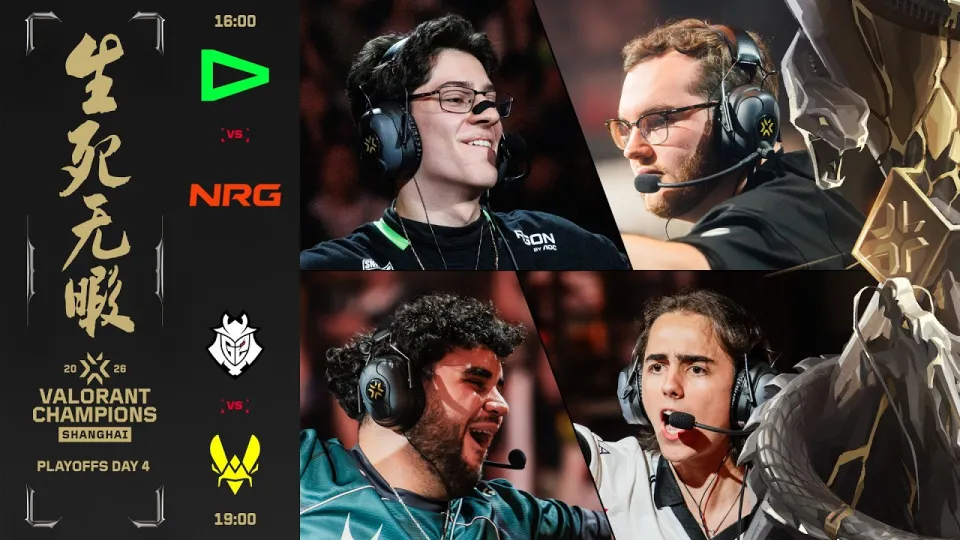
Valorant is a tactical first-person shooter that emphasizes team coordination, map control, and agent abilities. The recent VALORANT Champions Shanghai playoffs showcased how top-tier teams like LOUD, NRG, G2 Esports, and Team Vitality leverage these elements to gain competitive advantages. Understanding their strategies provides insight into what makes a successful Valorant team and how map selection influences gameplay.
Importance of Team Dynamics in Valorant
Teamwork is the cornerstone of Valorant success. Each match requires players to synchronize their strategies, communicate effectively, and capitalize on their agents' unique abilities. For example, LOUD and NRG’s matches in the playoffs demonstrated intense coordination, especially during extended rounds on complex maps like Haven and Summit. Teams must balance aggressive plays with defensive setups, often adapting their approach as the match progresses.
Strategic Map Choices and Their Impact
Maps like Haven, Sunset, Summit, Abyss, and Split, featured in the Champions Shanghai playoffs, each demand different tactical approaches. Haven's three-site layout demands versatile control and flexible rotations, while Sunset and Summit require teams to manage verticality and narrow chokepoints effectively. The choice and mastery of these maps can dictate the pace of the game and influence which team gains momentum.
Agent Selection and Role Fulfillment
Selecting the right agents is crucial to complement map strategies and team composition. In the showcased matches, teams like G2 Esports and Team Vitality employed agents that maximize map control and provide utility for both offensive pushes and defensive holds. This selection process involves considering agent abilities that can counter opponents’ strategies or exploit map features.
Highlights from LOUD vs NRG and G2 Esports vs Team Vitality Matches
The LOUD vs NRG series was a marathon battle with close scores on Haven (36:43) and extended playtimes on Sunset and Summit, illustrating endurance and adaptability. Meanwhile, G2 Esports faced Team Vitality on Abyss and Split, maps requiring precise execution and split-second decision-making. Viewers praised Team Vitality's performance as notably strong, indicating their potential as championship contenders.
Common Tactical Questions in Valorant Playoffs
Many questions arise about how teams manage such long and intense matches, such as maintaining focus during extended rounds and managing economy for agent purchases. Teams often rely on pre-planned strategies and in-game leadership to navigate these challenges. Additionally, how teams adapt to opponents’ playstyles mid-match is a key factor in playoff success.
Conclusion
Valorant’s competitive scene continues to evolve, with the Champions Shanghai playoffs providing a clear example of how team dynamics, map strategy, and agent selection coalesce into high-level gameplay. The intense matches between LOUD, NRG, G2 Esports, and Team Vitality underline the importance of preparation and adaptability. Coverage by VALORANT Esports Thailand offers valuable insights into these dynamics, assisting fans and players in understanding the complexities of competitive Valorant.
Key takeaways
- VALORANT Champions Shanghai featured high-level matches with LOUD, NRG, G2 Esports, and Team Vitality
- Playoffs included intense matches on maps Haven, Sunset, Summit, Abyss, and Split
- Team Vitality demonstrated strong performance, noted by viewers as an outstanding contender
- Strategic map control and agent selection were critical in close matches lasting over an hour
- Team coordination and adaptability defined outcomes in these high-stakes playoff matches
Source: [TH] LOUD vs NRG | G2 vs VIT - VALORANT Champions Shanghai - Playoffs Day 4 · Markdown version
Questions & answers
What maps were played during the VALORANT Champions Shanghai playoffs featured in the video?
The playoffs included matches on Haven, Sunset, Summit, Abyss, and Split, each requiring different tactical approaches from the teams.
How important is team coordination in Valorant competitive matches?
Team coordination is essential in Valorant as it allows players to execute complex strategies, optimize agent abilities, and adapt to dynamic in-game situations effectively.
Why did viewers consider Team Vitality a strong contender in the playoffs?
Viewers noted Team Vitality's superior performance and strategic execution, highlighting their ability to manage challenging maps and opponents, marking them as a top competitor.
How do teams manage long and intense Valorant matches during playoffs?
Teams maintain focus and adaptability through pre-planned strategies, effective communication, and in-game leadership, ensuring optimal resource management and timely decision-making.